
Face Mask Fit Testing
Available in our Adelaide Training and Testing Centre
34a Smith Street, Walkerville SA
34a Smith Street, Walkerville SA
Hazmat Response
Industrial Safety
Medical Care
Hazmat Response
Industrial Safety
Medical Care
Hazmat Response
Industrial Safety
Medical Care
Hazmat Response
Industrial Safety
Medical Care
What is Respirator Fit Testing?
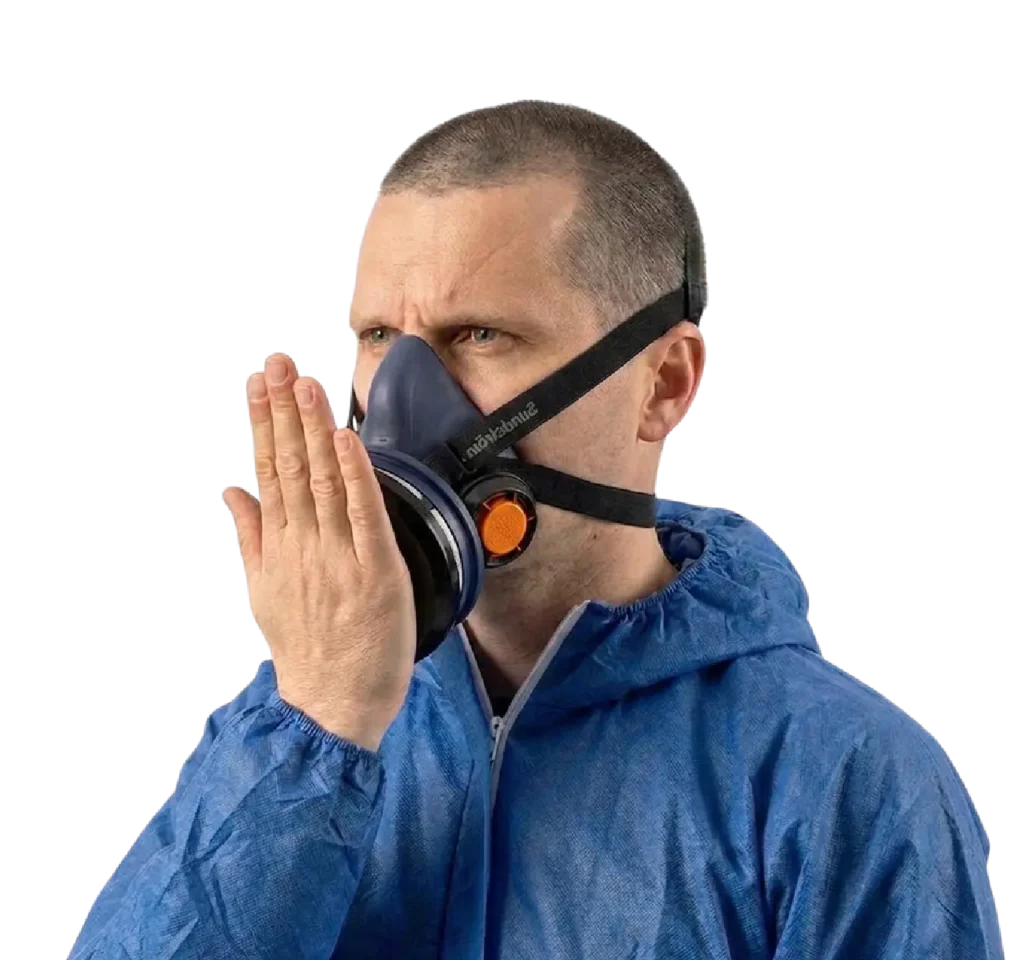
Fit testing verifies that a tight-fitting mask—whether it is a disposable, reusable half-face, or full-face respirator—forms a secure, adequate seal to your face.
Why a seal is critical
Simply wearing a respirator does not guarantee protection. If there is even a small gap between the mask and your skin, unfiltered or contaminated air will simply bypass the filter.
In other words, the mask cannot deliver its rated protection without a confirmed seal and exposure could occur.
How Fit Testing works
Testing assesses the mask seal by:
Particle Comparison
A testing machine measures the number of particles in the air, and compares them to the particles detected inside the respirator—while you do some really simple head movements to simulate work activity or use.
Quantitative Measurement
This specialised method provides an objective, numerical measure (a “fit factor”) to determine exactly how well the specific mask protects the worker against an accepted international standard.
More than just comfort
A proper fit is a critical health and safety requirement, not just a matter of daily comfort. An improperly fitted respirator leaves the wearer vulnerable to serious, long-term health consequences from hazards like:
Solid particles
Asbestos, crystalline silica, lead, diesel and welding fumes, smoke, fungal spores, parasites, bacteria and viruses
Liquid particles
Fine sprays/aerosols including paints, pesticides, powder coating, and mists like chrome acid, cutting fluids, and oil mist.
Vapour
Gaseous forms of a solid or liquid, like solvents, glues, petroleum products
Gas
Carbon monoxide, diesel particulate, sewer (methane), and chlorine.
In some instances, a substance can exist in more than one form at the same time.
For example: paint spraying can produce fine mists of liquid droplets and also solvent vapour.
Our Face Mask Fit Testing includes basic training to do a proper Fit Check each time you wear it
Here's what you will learn

- Why respirators are being worn and when they are required.
- How the respirator actually works to lower your exposure to a contaminant.
- The limitations of the respirator being tested.

- How to assemble the respirator.

- How to don or put on the respirator, and how to doff or take off the respirator.
- How to complete a Fit Check.

- How and when to change the filters.
- What your current filters will protect you against.

- How to clean, maintain and store the respirator.
Fit Test + Training for individuals and groups
Questions? Call Andrew and the team on (08) 8241 5333